
If Loving You Is Wrong
Cheryl Head's brilliant short story, "Finding Jimmy Baldwin"

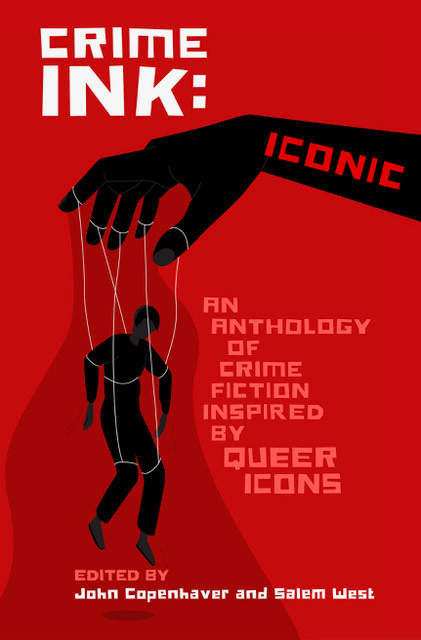
No sooner had I reread and wrote an essay/newsletter about Christa Faust’s marvelous Derringer nominated story “Hollywood Prometheus” than another story from the anthology, Cheryl A. Head’s “Finding Jimmy Baldwin,” was selected for inclusion in the Best Mystery and Suspense anthology, curated this year by Steph Cha and Megan Abbott. How wonderful is that? So, of course I had to come home that night and read Cheryl’s story, and in doing so, realized something about myself. I tend to inevitably not read anthologies I have a story in, and I’ve often wondered about this. I love short stories and I love reading anthologies. So why do I have such reluctance to read anthologies I have stories in?
Probably due to my lifelong anxiety, reading other stories in anthologies I am in could would sometimes make me compare my story to the others. Thanks to the anxiety-driven Imposter Syndrome, I always used to find my stories to be inferior to the others. Again, this is from anxiety more than anything else—but I do remember reading Christa’s story when I got the anthology and was so blown away by it that I got that sinking feeling: oh my God, my story isn’t even close to being on the same level, and I actually was proud of my story. But do to an uncontrollable impulse of anxiety-driven self-protection, the coping mechanism kicked in and I simply shelved my author copies. (I forget that I am medicated for it now and no longer need such coping mechanisms.)
But then I’ll read a story like Cheryl’s, and am reminded of why I used to react that way.
Damn, y’all, she’s good.1
June 1954
The bell over the door jingled. A think, light-skinned woman, her gray hair pulled back in a net, pushed throught the swinging gates of the kitchen, wiping her hands on a cotton apron decorated in a fruit-and-vegetables pattern.
“Hi, Miss Shirl.”
“Hi, baby. Go ahead and sit. I’ll bring you your coffee.”
Roy slid into Jimmy’s booth. That’s what regulars at Shirley’s Cafe on 130 at Lenox called the seat at the at the far end of the front window. An homage to the neighborhood’s favorite son.
“I’m running late. I thought he’d be here by now.”
Shirl shook her head, placing two cups and a small container of milk on the table. “I got excited when I saw you. Thought maybe he was right behind you. He wasn’t here yesterday either.”
James Baldwin is a legend.
I don’t remember when I first read Baldwin, but I know the book was Giovanni’s Room and reading it was revelatory. I’d already discovered queer fiction by then, but I’d never read anything like this before, that made me think about the world in ways I’d never had before. As I read more of his work, that sense of revelation and education, of mind and viewpoint expansion never really went away. His intellect and wit, his use of words and lyrical poetic way of both writing and speaking both fiction and nonfiction, that very clear voice that was so uniquely his always blew me away. His courage, his refusal to bow in the face of horrific bigotry yet always standing defiant in who he was, and often framing it threw the lens of an American dream denied was so damned important he should be required reading.
Cheryl is also that kind of writer; fiercely intelligent, gifted with a remarkable grasp of language and storytelling with a strong perspective that makes her work stand out, from the very first Charlie Mack mystery through her brilliant stand alone Time’s Undoing, which remains one of my favorite books of the last few years. She also recently won the Saints and Sinners Short Story contest—and I am looking forward to reading that story soon.
“Finding Jimmy Baldwin” is bold, brilliant and stunning. Focusing on Roy, who was Baldwin’s best friends to boyfriends narrative when they were teenagers, they are still friends, but Jimmy has moved on. He’s lived in Paris, fallen in love with someone else, and just is back for a visit, but waivering about going back. It’s at the diner that Roy hears that Jimmy has disappeared, possibly kidnapped, and also has an all-too-realistic encounter with a cop investigating the case but using it as an excuse to express his racism. Can Roy find Jimmy? Who has taken him? And what are Roy’s own feelings now?
The story takes an interesting twist about midway through; mentioning more would spoil this gem of a story—so you have to read it for yourself. But Cheryl brings that time and place to life in a compelling story about love, loss, desire, and moving on, all wrapped up in a tale so beautifully told as it brings the reader along for a deeply satisfying ride.
The true progress here is that I did not feel that way this time, simply recognized how and when that feeling used to occur, and why. I am getting there.